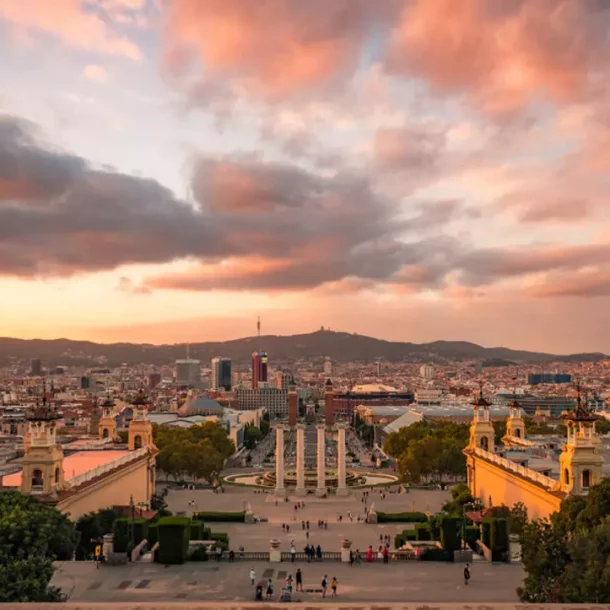

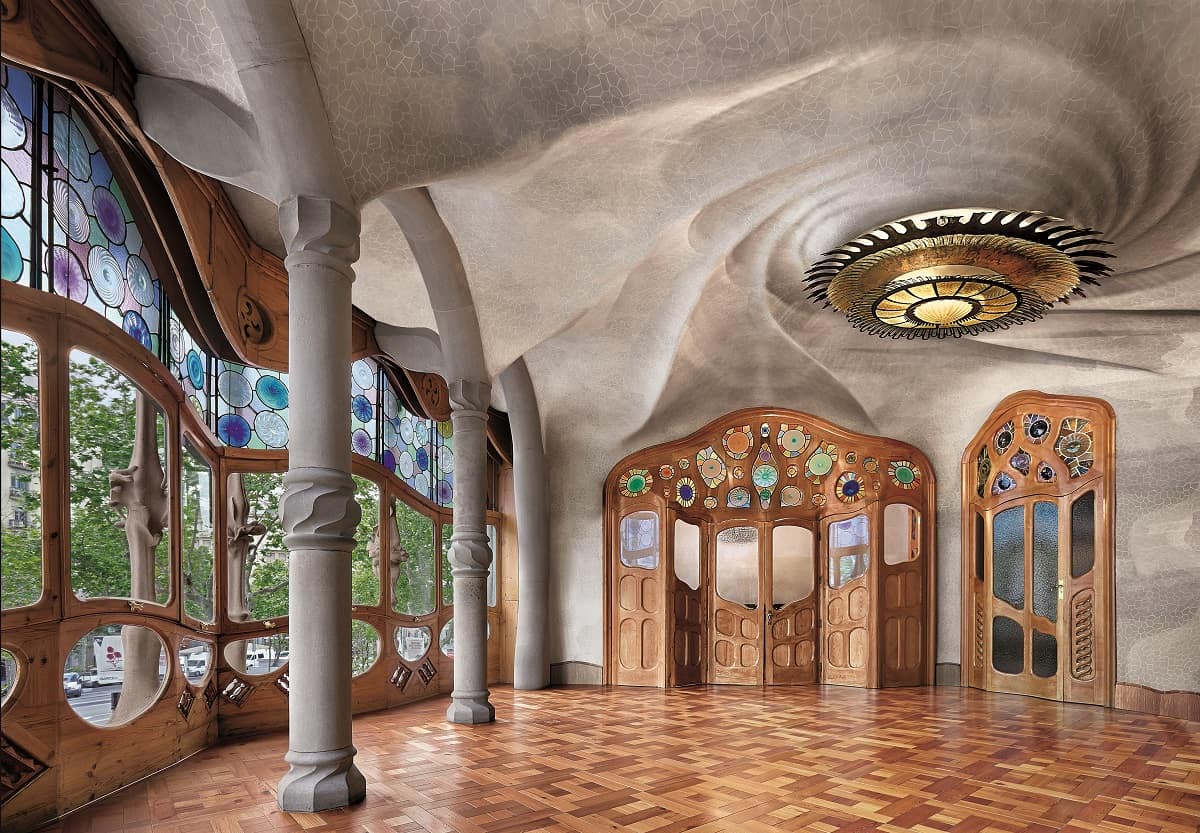
Barcelona is much more than sea, gastronomy and football. The Catalan capital holds one of the most unique architectural heritages in Europe thanks to the strong momentum of Modernism at the turn of the 19th to the 20th century. This artistic current, which deeply influenced architecture, sculpture and design, has Antoni Gaudí as its most emblematic figure, although he is not the only reference. On this route we will explore the city’s main Modernist works, discovering the most creative, dreamlike and beautiful Barcelona.
Catalan Modernism was an unprecedented expression of creativity. Traditional techniques were combined with industrial innovation, while inspiration from nature and organic forms marked every design. This movement, which coincided with a period of great economic prosperity in Catalonia, left its mark especially on Barcelona, turning it into an open-air architectural museum.
During this route, we will see both the most popular works and other lesser-known gems, exploring different neighbourhoods and corners that bear the signature of the great Modernist masters. If you are coming to Barcelona and don’t know where to stay, we have 2 hostels in the centre of Barcelona. Here is a perfect place to stay in Barcelona
The universal symbol of Barcelona and Gaudí’s most significant work. Although construction began in 1882, it is still ongoing, with completion scheduled for the coming years. Its impressive façade, its towers rising to the sky, and its interior full of light and colours projected by the stained glass windows create a spiritual and artistic experience like no other.
Originally conceived as a luxury housing development, Park Güell became a gigantic public park where the essence of Modernism is expressed in mosaics, serpentine shapes, sculptures of fantastic animals and panoramic views of the city. Its iconic staircase with the salamander and the Hall of a Hundred Columns make it a unique place.
Located on Passeig de Gràcia, this masterpiece surprises with its undulating façade, adorned with brightly coloured ceramics and balconies reminiscent of carnival masks. Inside, every detail is cared for to the extreme, with a total absence of straight lines and carefully studied natural lighting. It is a journey into Gaudí’s artistic universe.
Also on Passeig de Gràcia, this building breaks all the moulds of its time. The undulating forms of its façade, the absence of load-bearing walls, its inner courtyard and the innovative use of natural ventilation show Gaudí’s genius. Its rooftop, decorated with chimneys that look like something out of a fairy tale, offers one of the best views of Barcelona.
Designed by Lluís Domènech i Montaner, this concert hall is a masterly work of light and colour. Declared a UNESCO World Heritage Site, its stained glass, sculptures and mosaics make it a true temple to art. We recommend visiting with a guide or attending a concert to enjoy its exceptional acoustics.
Another of Domènech i Montaner’s great projects, this is a former Modernist hospital now converted into a cultural centre. Its set of pavilions connected by underground corridors and surrounded by gardens is an example of functional and aesthetic Modernism. Walking around this site is like walking through a utopian city.
Next to Casa Batlló, these two gems complete the so-called “Block of Discord” (Manzana de la Discordia), in the middle of Passeig de Gràcia. Casa Amatller, by Puig i Cadafalch, fuses Gothic elements with Flemish influences. Casa Lleó i Morera, the work of Domènech i Montaner, stands out for its floral stone details, its stained glass and its marble columns. Both rival the neighbouring Gaudí work in beauty and detail.
A basic route through the main Modernist sites can take between 2 and 3 days. For a complete experience, we recommend setting aside a minimum of 4 days, allowing you to take each building in calmly, take guided tours and explore less touristy areas.
Many of the Modernist works mentioned require a paid ticket and some, such as the Sagrada Família or Casa Batlló, sell out easily. It is highly advisable to buy tickets in advance. There are also combined passes that cover several Modernist attractions.
The Modernism route in Barcelona is not simply an architectural journey, it is a cultural and sensory experience that immerses you in the boundless creativity of the city’s most vibrant period. From Gaudí’s genius to the innovative designs of Domènech i Montaner and Puig i Cadafalch, this route turns every walk into an open-air art lesson.
Barcelona would not be the same without these buildings that have made its skyline one of the most recognisable in the world. If you have a passion for art, history and architecture, this route is a must for discovering the most inspiring Barcelona. Here you can find out where our hostels are located. Pars Tailor’s Hostel and Pars Teatro Hostel
It is possible to visit some of the most emblematic works in a day if you plan your itinerary well, but we recommend at least two days for a more complete and unhurried experience.
Spring and autumn are ideal for the pleasant weather and fewer tourists. It can also be done in summer, although it is advisable to avoid the hottest hours.
Some works allow free exterior access, such as Park Güell (the monumental zone is paid), or the Hospital de Sant Pau from its outer gardens. However, to enter most of the buildings you must buy a ticket.